Where to Mountain Bike in the Dallas Fort Worth area

Looking for a good place to ride a mountain bike in the DFW area?

It can be hard to find places to mountain bike near you. Even if you go ask someone at your local bike shop, you might only get a suggestion of one or two major mountain bike trails.

I did some searching around, and I found these four great resources for finding mountain biking trails in North Texas.

Texas Mountain Bike Trails has a terrific listing of DFW area trails, along with detailed information about many of the trails. Shawn has a terrific mountain biking blog in general, with a great YouTube channel, and Facebook page too, and don’t forget to sign up for his email list if you visit his site for good updates.

Mountainbiketx.com has a seriously comprehensive list of mountain biking trails in the DFW area and North Texas, but also the rest of the state of Texas.

Dallas Trails has a up to date listing of local trail conditions, so you can avoid showing up somewhere and finding out that it’s too muddy to ride.

And finally, don’t miss the DORBA (Dallas Off Road Bicycle Association) list of trails and active message board.

Did I miss any good lists of trails or awesome sites? Leave a comment and let me know!

Review: Chamois Butt’r skin cream for bicycling

Chamois Butter skin cream for cycling

Until last year, I never used any kind of skin lubricant / chamois cream for cycling. I can finish a century ride without a lot of discomfort, so it seemed like a waste of money to me.

But in 2012, I rode the Leadville 100, which takes anywhere from under nine hours to twelve hours to finish. (It ended up taking me 11:42, but I finished and got my buckle!) That’s a lot of saddle time.

Knowing that I was in for a long day, I bought a tube of Chamois Butt’r skin lubricant, and started trying it out on other rides before I used it on race day. I wasn’t sure if it was the best chamois cream, but I knew it was a very popular one, so it seemed like a good one to try.

There are a lot of different products in this category, with a lot of “clever” names like DZ Nuts, Enzo’s Buttonhole Cream, Assos (I know, it’s an entire cycling brand, but still), Belgian Budder, Nubutte, Hoo Ha Ride Glide and plenty of others like these written up at Bicycling magazine.

I haven’t tried all the other brands, so I don’t know if there’s a significant difference between them, or if they all work pretty similarly.

But I can tell you that Chamois Butt’r works just great, and caused zero negative issues for me. If you do have friction issues from your bicycle saddle, then this might be a great solution for you. I put it on and forgot about it, and successfully rode for almost 12 hours with no saddle sores later.

It is non greasy, and it washes out of your shorts (and off your skin) just fine. It contains no paraben. It has no detectible smell.

You can apply it directly to your butt, or you can rub it onto the chamois of your cycling shorts. I use about a quarter sized amount in my hand, or maybe a little more than that.

I bought one big tube and only apply it once during any ride, but I have read that among recreational cyclists who are doing longer rides, it is popular to carry the individual packets and reapply later in your ride for additional comfort. Sounds like overkill to me.

What’s it made of? Here’s from the ingredient list.

Ingredients: Water, Mineral Oil, Ethylene Glycol Monostearate, Stearic Acid, Cetearyl Alcohol, Stearyl Alcohol, Propylene Glycol, Sorbitol, Vitamin E, Vitamins A and D, Propylparaben, Methylparaben, Sodium Hydroxide, Aloe, Lanolin.

Did I leave anything out? Leave a comment and let me know, and I will update the review.


Review: Mavic Rush cross country mountain biking shoes

Mavic Rush cross country mountain biking shoes review

I have been riding Mavic Rush cross country mountain bike shoes since the fall of 2012, through a whole season of cyclocross and some mountain biking.

The reason I bought new mountain biking / cyclocross shoes in the first place is that I have been having pain on the ball of my left foot for an extended period of time, and decided that I would try buying new road and mountain biking shoes (and a new cleat position) to see if that solved my problem before I give up and go to the doctor.

I went to two local bike shops here in Dallas — Richardson Bike Mart and Dallas Bike Works. I tried on every pair of high end to mid range mountain biking shoes that they carried, looking for the most comfortable fit. Although a comfortable fit in the store doesn’t guarantee that they will be comfortable while pedaling, I wanted to at least see if they were hurting the ball of my foot when I tried them on in the store and avoided shoes that did.

I typically ride high end shoes, and was hoping that something like the top end Mavic Fury might work for me. The Fury shoes were also comfortable, but I could feel the heel of my foot slipping when I walked in the Fury, which would not be acceptable for running during cyclocross racing. The Rush shoes did not have this issue for me. (The fact the my heel slipped in them doesn’t mean that everyone’s heel will slip! I have relatively narrow heels.)

The Mavic Rush shoes have a good ratchet system at the top of the shoe to make sure that your shoes stay on at exactly the tightness that you require. The ratchet works well and doesn’t slip, and has held up well for me so far. To release them, you grab a little lever and pull outward, and they come right off.

The bottom two straps are Velcro. I typically keep the very bottom strap always strapped shut, because I can slip in and out of the shoes by loosening the top and middle straps. The Velcro for the middle strap is good quality, and has held up fine coming on and off. One issue I notice with the middle strap is that when I tighten it in the house, I can feet a small lump on the top of my foot. But when I stand up and when I click into the pedals, I no longer feel this and have no comfort issues with the shoe during riding and running with them.

The footbed of the Mavic Rush shoes are very comfortable, and I was able to pedal and run in these shoes comfortably.

Outsole bottom of Mavic Rush cross country maountain biking shoes with spd cleats

The “Energy Grip Outsole” of these shoes is not carbon like the Mavic Fury, but it feels plenty stiff to me. Comfort was more important to me than stiffness in this situation, particularly since I also use the shoes for cyclocross racing and run in them and jump over barriers. As you can see from the photo, you can also attach spikes to the front of the shoes if you are racing in mud or ice.

The cleats on the shoes and the “Contagrip” rubber on the bottom make them very good for running without slipping. If you’ve ever had a pair of mountain biking shoes that don’t grip, you probably know how that can suck when you’re trying to run your bike up something rocky or muddy and slippery.

As far as temperature goes, I haven’t ridden them in the summer yet, but I have ridden them on 80 degree plus days with no heat issues. And down to the mid 40s, I am fine with wool socks. Under 45 degrees, I’ll usually add neoprene toe caps to the wool socks to keep warm.

There is plenty of room in the toe box of these shoes, and I am able to ride with thicker wool socks when the weather gets cold.

These shoes are usually priced around $129. I think I paid $129 locally. So they are a very good value, especially compared to the high end Fury that costs more than $300. Bicycling Magazine agrees with me on the issue of comfort and affordability.

Did I leave anything out with this review? Leave a comment and ask me a question or let me know what else I should include, and I will update the review accordingly.


Best Wool Cycling Socks: The Shootout

wool cycling socks

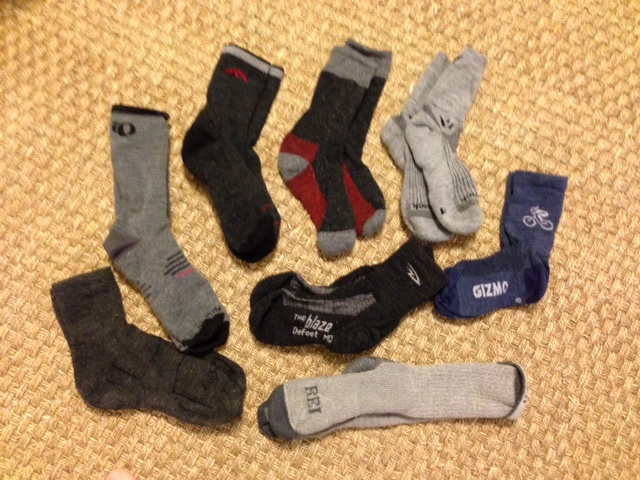
Looking for the best wool cycling socks? I was too. I checked my sock drawer recently and realized that I might have gotten a little bit obsessed during my search for the best wool socks. I bought every single pair of these at retail, over a period of a couple of years.

I figured that I would share what I had learned so that everyone else won’t have to spend as much money on socks as I did.

If you don’t care to read about every different pair of socks and just want to know which ones are good, then I will give you the best first.

It’s really almost a four way tie, because there are four pair that I totally love. In fact, I’m happy with all of these socks listed and wear them all regularly, except for the Smartwool socks, which have not held up well in the wash compared to all the others.

swift wick pursuit 4 merino wool socks review

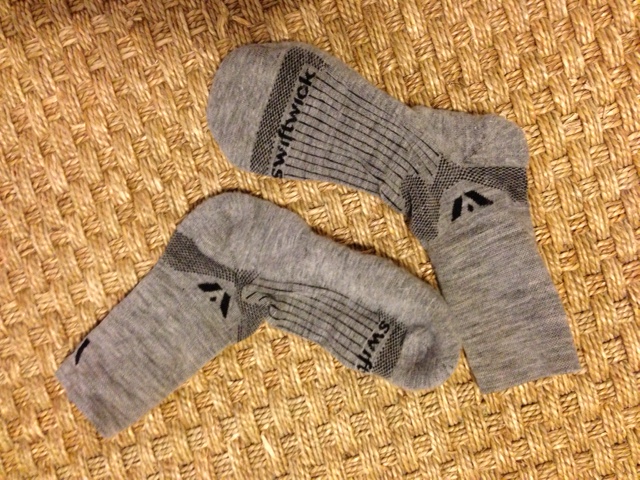
If I had to pick just one pair as the best, I’d choose the Swiftwick Pursuit 4 merino wool socks. First of all, they have an outstanding fit that’s really snug. Swiftwick describes them as compression socks, to give you an idea. The wool is not itchy. The breakdown is 60% merino wool, 30% nylon, and 10% lycra. You’ll get just the right amount of padding for your foot, and a sock that holds up extremely well in the wash.

Darn Tough Vermont Merino Wool Socks review

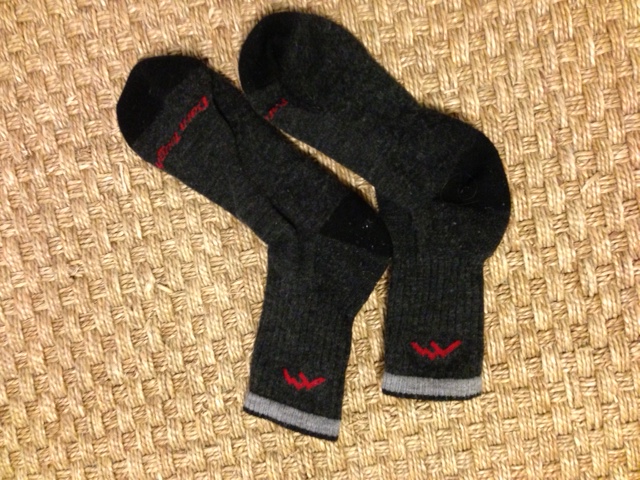
One of my other top four wool cycling socks isn’t a cycling specific sock at all. It’s the Darn Tough Vermont Merino Micro Crew. These socks all work great as a standard pair of dark socks, so you get dual use out of them. The Darn Tough brand is made in the USA, in Vermont. 67% Merino Wool, 29% Nylon, 4% Lycra / Spandex. They have outstanding build quality, good padding, and they hold up great in the wash. If you want a wool sock that you can wear when you’re on and off the bike, these socks are the way to go.

sockguy wooligan cycling socks review

My Sockguy Wooligan cycling socks are in my “top four pretty much tied for first” list of favorite wool socks. I also bought a thinner standard wool cycling Sockguy pair of socks that are similarly well made and comfortable. Good pricing, outstanding quality, terrific fit, and holds up well in the wash. Sockguy calls his type of wool Turbowool. “Made with 75% TURBOwool, a superior blend of 50% polypropylene and 50% Merino wool, which provides five times the strength and durability of Merino wool alone.” So what that really means is that the “75 percent Turbowool” really means around 37 percent wool content of the entire sock. Still, these socks are great.

Pearlizumi elite thermal wool cycling sock review

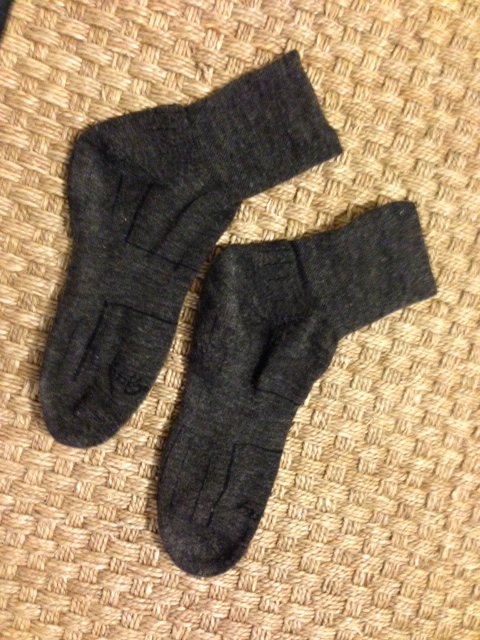
Also in my “four way tie for first place” is this pair of Pearlizumi Elite Thermal Wool Cycling Socks. I haven’t had these socks for a long time, but they are holding up very well in the wash so far. The high nylon content tells me that they should be pretty durable. They are just the right thickness for winter, but should also do well as the weather starts to warm up. Wool really does work well in hot and cold. These socks come up pretty high, and are also suitable as a dress sock or casual sock if you get a plain pair like I have.  49% nylon, 48% Merino Wool, 3% spandex.

defeet blaze wool cycling socks review

My Blaze wool socks by Defeet have the thickest padding of all my socks except maybe for my REI midweight wool hiking socks. I’m not sure if they are calling these the Woolie Boolie now, or if that is a different sock. 63% Wool 27% Nylon 10% Lycra Spandex. The wool in these socks doesn’t say Merino, so I’m not sure if it is. They are a little bit more course than my other wool cycling socks, but I would not describe them as itchy. Even with the high percentage of wool, these have really held up well in the wash.

REI wool hiking socks review

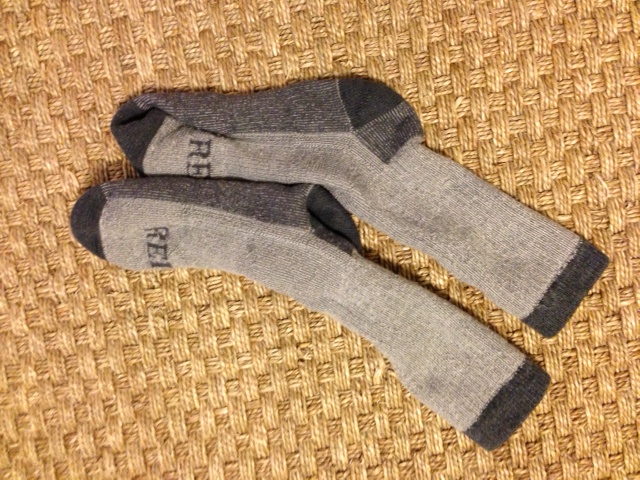
My REI wool socks are actually hiking socks, and not cycling socks at all. They are thicker than my other cycling socks, so I often wear them when the temperature is colder. If you have very snug cycling shoes, these might be a little bit too thick. They have a very high wool content, which makes them warm. But I also wear them in warm weather off the bike, and they don’t get too hot. REI only puts their name on quality stuff, in my experience, and these socks are great. I also wear them hunting and hiking. They are cheap too, at around $13. 78% wool/20% nylon/2% Lycra spandex.

gizmo wooly-g merino socks review

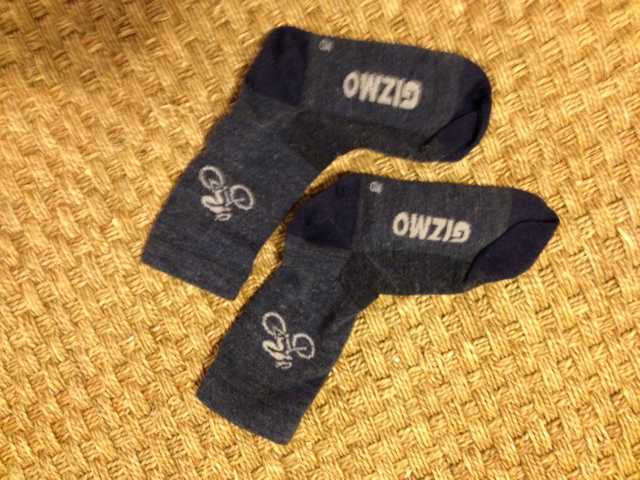
I picked up my Gizmo Wooly-G cycling socks at Richardson Bike Mart. They have held up well in the wash and are adequate socks, but one of my least favorite pair. They are thinner than most of my other wool cycling socks, so they are great summer wool socks and okay winter socks. I like a little bit more padding in the sole than these socks provide. If you like thin and durable though, you can’t go wrong with these. I think it’s the high percentage of nylon that makes them hold up so well. 55% Merino Wool 40% Nylon 5% Lycra.


smartwool hiking socks

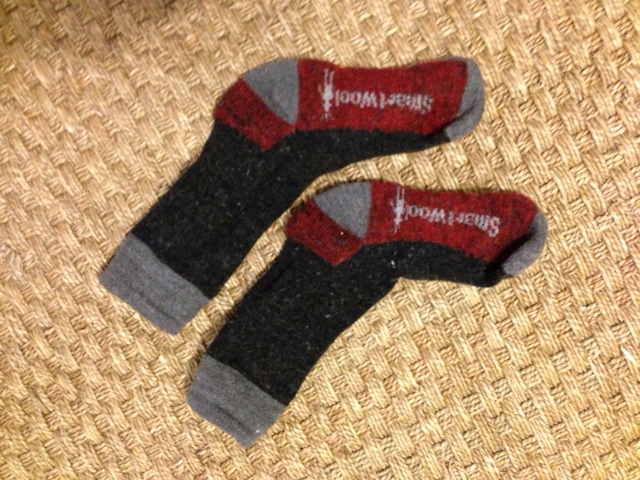
My worst pair of wool cycling socks is my Smartwool socks. I don’t know why these have become so baggy and frayed over time, while all my other wool socks have held up. Perhaps it is the low percentage of elastic material in these socks. I’m a fan of Smartwool in general. I wear my Smartwool hoodie all the time, and my Smartwool midweight base layer is one of my favorite winter base layers for cycling or any other outdoor activity. 74% merino wool, 25% nylon, 1% elastic. I do not recommend these.

What’s your favorite pair of wool cycling socks? Have you tried any of these? Leave a comment and share your experience to help everyone else shopping for socks.

Best Clincher Bicycle Tire for a Road Bike: 2013 Continental Grand Prix 4000 S

Continental Grand Prix 4000 S review

Looking for the very best road bike tire, period? In most cases when you talk about bicycle tires, you have to be more specific and say something like the best tire for training, or the best tire for racing, or the best tire for puncture resistance. But with the Continental Grand Prix 4000 S, you really get the best tire for road bikes, period.

I have been riding Continental tires since the late 1980s, and in my opinion they have always made the best all around road bike tires. Every time I’ve tried out something else that I think is better, I’ll usually get 3 flats in a week and give up in frustration and throw away whatever tire it was that I was trying.

The Grand Prix 4000 S is the flagship top of the line clincher tire from Continental. If it isn’t the most expensive clincher tire that they make, it’s up there near the top.

I used to ride Continental Gatorskins, because I would never, ever flat with them. I detest changing flats. In my opinion, any weight savings from a tire are worthless if you end up flatting on your ride.

But they talked me into trying the Grand Prix 4000 S at my local bike shop, explaining to me that it’s a lighter tire that is extremely grippy that is still almost as puncture resistant as the Gatorskins.

It sounds too good to be true, doesn’t it? How can it be light and grippy, and still have a long life and never flat?

One reason is the special “Black Chili” rubber compound developed by Continental. It grips well on both wet and dry asphalt, but somehow still doesn’t wear out quickly. I rode 10,000 miles in 2012 and only went through two sets of Grand Prix 4000 S tires. And I kept one of the front tires that I replaced, because it still has a enough tread that I could put another 1,000 or more miles on it if I ever accidentally ruin a tire and need a spare until I buy a brand new replacement.

The reason they never flat is a layer of Vectran, which is some material that is like Kevlar, but different. Maybe Vectran is not quite as puncture resistant as Kevlar, because the Gatorskin tires use Kevlar, and those are sold as Continental’s most puncture resistant tires. But I can tell you from experience that Vectran is good enough!

I typically ride thousands of miles without ever flatting. If I do flat on my Grand Prix 4000 S tires, it’s usually because I’ve ridden them after they have worn out to the point of replacement. At more than $50 per tire, you can probably understand why I like to get every last mile out of them before I change them.

Let’s talk about the expense of these tires. In my opinion, these tires are worth every penny. These are high end racing tires. They have very low rolling resistance. They only weigh just more than 200 grams. They stick like crazy in the corners, even when it’s wet. But they still wear out slowly, and they almost never flat. What other high end racing tires can you train on and not worry about wearing them out too quickly or flatting too often?

Don’t want to take my word for it? Check out what Tour magazine of Germany concluded after going through a comprehensive test of a huge number of different bike tire brands.

Grand Prix 4000S was the most consistant tyre with a weight of 207 grams on the test sample. Its rolling resistance measured in at 34.3 watts, beating even the lighweight race only tyres from the competitors.

The speed at which the GP4000S reached on the wet corner was 33 km/h, almost the same as our wet specific GP4Season, and higher than its main competitors. The time it took a sharp screwdriver to penetrate the GP4000s through the tread at a load of 35 kg was three minutes. In fact the test was stopped prior to any penetration as three minutes was defined by the magazine as a ‘pass’. Only two other brands also attained a pass grade here.

The Grand Prix 4000S comes in 700 x 23 and 700 x 25. I recommend the 700 x 25, which gives you an extremely plush, grippy ride with lower rolling resistance than a 23.

What? How can a wider tire have less rolling resistance? Sounds crazy, but it’s true. Read this article by Lennard Zinn on Velonews, and this other article that goes into more detail.

Here’s another secret that you’ll learn from those Velonews articles. Running a lower tire pressure also gives you lower rolling resistance than running them at maximum pressure. I run mine at 95 psi in the front and the back. Maximum pressure for the Grand Prix 4000S is 120 psi.

If you want to improve your ride quality, you won’t believe how much safer, smoother, and more comfortable you will feel riding a 700 x 25 tire at 95 pounds. Cornering is like riding on rails, and the ride is plush and less fatiguing than getting beat up by overinflated tires that are hard as a rock. And yet it still rolls faster! Try it, and you’ll never go back to max pressure again.

Do you agree with my choice for the best road bike tire ever? Disagree and think there’s a better bicycle tire out there? Leave a comment and let everyone know!