Review: Serfas Men’s Superleggera Cycling Shorts with Gel Chamois

Serfas Superleggera gel chamois cycling shorts review


I’ve been a fan of Serfas products since I bought my first Serfas bike headlight and bike taillight that I use almost daily. So when Serfas sent me a pair of their Superleggera cycling shorts for review, I was excited. I have been looking for a brand of cycling shorts to wear to switch away from Pearl Izumi, which used to be my favorite, but don’t seem as great as they once were in the past couple of years. (Look for my cycling shorts shootout post soon, where I will compare all the brands I have been trying out, including Mavic, Specialized, Bontrager and a few other brands.)

Although a lot of cyclist swear by bib shorts, I don’t like them and prefer standard cycling shorts. I don’t like the feeling of the straps on my shoulders, and I also don’t like the inconvenience of getting them on and off. Sure, the tops of standard cycling shorts might ride down a little bit over time, but that doesn’t bother me compared to bib straps.

Sizing for cycling shorts can be a crapshoot. As someone who weighs around 150 pounds with a 30 waist, I wear a medium in Pearl Izumi and Specialized. But in a Castelli, I have to wear a large. And with Serfas, I end up wearing a small. It’s really annoying if you want to try a new brand of shorts, because you can never know for sure what’s going to work for you in advance.

gelchamois


My first concern with “gel” in the name of the shorts is that they would be heavy or have a super squishy feeling to them. But the shorts don’t weigh any more than any of my other shorts, as far as I can tell by holding them. And the chamois feels like a regular chamois — a very comfortable one at that. The gel is described as “a lightweight, nitrogen infused, anti-migrational gel.”

Serfas describes the Superleggera as a “touring short that is designed to provide maximum comfort and performance for long rides.” But they fit just like any of my “racing” cycling shorts, and the price of $100 suggested retail puts them in the same category as the other mid to high end cycling shorts of other brands that I wear. I think maybe they just mean that these shorts are suitable for higher mileage days in the saddle.

The stitching and construction of these shorts is very high quality. I was impressed with the little details, like how they have the brand and model printed on the chamois, and how they have the brand on the inside of the really nice silicone leg grippers that keep the shorts comfortably in place. They call the seams “flat lock seam technology,” which I think just means that they use flat seams that don’t rub when you are pedaling.

The shorts have 10 panels, which give them a very comfortable fit. The inseam is 9.5 inches, and they come down on my leg to a similar position as other brands like Pearl or Specialized or Castelli.

These shorts are comfortable, and will keep a permanent rotation in my cycling drawer. If you get the chance to pick up a pair, you won’t be disappointed.

Did I leave anything out? Have any questions about the shorts? Do you own a pair? Leave a comment!

Review: Serfas RD-2 medium road bicycle saddle bag

Serfas RD2 medium bike saddle bag review

Serfas was kind enough to recently send me an RD-2 medium road saddle bag for review. I own quite a few Serfas products that I have bought myself over the years, so I was thrilled to try it out.

When you’re considering a bike bag, you’ll want one that is large enough to carry the tools and other items that you need, but small enough so that it doesn’t rub against your leg.

Different types of riders have different preferences. Most of the people I ride with are racers, who carry these really tiny bike bags that just have enough room for a tube and a tire tool. But you’ll also see plenty of recreational riders with these enormous bike bags attached, leaving you to wonder what they could possibly be hauling around.

I prefer a medium size, where you can put in a tube, patch kit, a couple of CO2 cartridges, a multi tool, and maybe a couple of bucks for emergencies. It looks a little bulky to the bike racing demographic, but it’s still small enough to be reasonable and large enough to pack a little extra inside.

The Serfas RD-2 medium is just right in the “medium” category, with a capacity of 34 cubic inches. The RD2 bike bag connects to your seat rails in the back, and your seatpost in the front, with velcro straps. Some other manufacturers like Topeak have changed their bags so that they have plastic clips instead of velcro, that make them a little easier to get on and off. But the velcro straps on the RD2 bag are substantial enough that they hold the bag in place reliably. The straps were long enough to reach around my super weird shaped aero seatpost on my Orbea Orca road bike.

One of the best features of this bag is that the outside material is water resistant. They don’t call it waterproof, and I haven’t ridden it in the rain yet, but the material looks and feels that it will keep all my stuff a lot drier than the standard ballistic nylon type of bag.

The bag measures 7 and a half inches long by 2.25 inches x 2 inches, which makes it kind of long and narrow. I had no trouble putting in my tube, two CO2 cartridges and a CO2 inflator, two Pedros tire tools, a patch kit, a pair of nitrile gloves, and a Park multitool. The sewing quality is good and the bag is sturdily made.

I like the rear reflective material on the bag, and the strap that allows you to attach an LED light to the back of your bike instead of clipping it onto your jersey pocket. I often ride at 6 a.m. with lights, so I use a rear blinker pretty much daily.

Overall, I am happy with this bag and will continue using it.

Do you own this bag or a different Serfas bag? Do you have a question about my review? Leave a comment and let me know!

Review: Shimano XTR PD-M985 Trail Mountain Bike SPD Pedals

Shimano XTR PD-M985 trail mountain bike pedals review

I have been riding the Shimano XTR PD-M985 trail SPD pedals since April of 2012. But I don’t use these pedals just for trail riding. I use them for cross country mountain bike riding, and also for cyclocross racing. Here’s why!

At 390 grams, they are only about 80 grams heavier than the other Shimano XTR PD-M980 XC pedals. I don’t find 80 grams to be a big deal as far as weight goes, especially in an off road context.

But I do find the metal cage around the pedals to be extremely useful, and worth the 80 grams. The cage makes these pedals brain dead easy to click into, without accidentally overstepping, or understepping and slamming the pedal into your shin. Your foot can this target under the most stressful situations, which is when you really want to be able to hit your pedal and not miss it.

Also, the cage protects these pedals against rock strikes, when you’re climbing something technical and trying to muscle through it and misjudge your pedal stroke and end up hitting a rock you are trying to ride over. That can save you some real money if the cage prevents you from ruining your pedals.

I used these pedals for the entire fall season of cyclocross racing in 2012, and I can tell you that I didn’t see another pair of these on the cyclocross course. But in a situation where getting a good start is hugely important (much like mountain bike racing), being able to immediately step onto your pedal and get right in provides an advantage. Maybe I just really suck at getting in my pedals and no one else on earth has a problem stepping into the standard XC pedals. But even so, the cage makes a positive difference for me.

The cage around the pedal also makes an excellent platform that allows you to keep pedaling even when you aren’t clicked in all the way. In cyclocross, after you jump back onto your bike after a barrier, it’s very useful to be able to continue pedaling somewhat efficiently for a few pedal strokes when you didn’t hit the pedal perfectly and didn’t get in. In a mountain biking situation, it lets you keep pedaling after you have dismounted, or dabbed your foot.

Aside from cyclocross, I have the lower XT model installed on my 2012 Specialized Stumpjumper 29er carbon comp mountain bike right now, to save a few bucks. But I successfully completed the 2012 Leadville 100 on the XTR pedals that are now on my cyclocross bike, with zero problems or issues.

I’ve ridden these pedals in a few muddy situations, and the cage sheds mud well, and still allows a muddy shoe to connect and clip in, just like you’d expect from the high end of the Shimano SPD line of pedals.

Like all other mountain biking clipless pedals, these are double sided pedals. It doesn’t matter which end is facing up when you stomp on them.

Overall, I think that Shimano sets the standard for clipless mountain biking pedals. You can’t go wrong with riding some kind of SPD pedal, and you’re likely to be able to try out your buddy’s bike if you use them, because so many other people have them too.

I have been very happy with these pedals, and recommend them. If you don’t want a cage, then go for the XC version, which is otherwise the same basic pedal without the cage around it and an extra 80 grams.

Got any questions about these pedals? Have you had a good experience or bad experience with them? Leave a comment and let us know!


Review: Road ID Wrist ID Elite Silicone Band

Road ID Elite silicone wrist band review


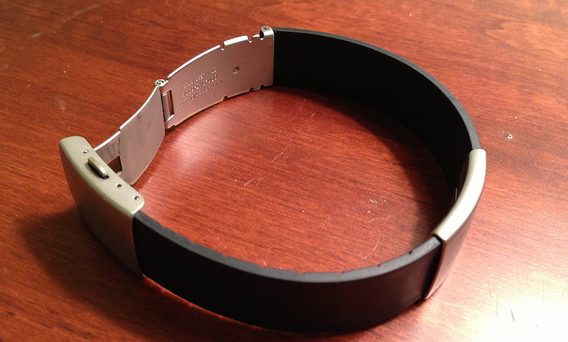
I bought the Road ID “Wrist ID Elite” silicone band not long after this model was introduced. Maybe 2011? In fact, the one I bought was so new to market that it had some kind of flaw in the catch mechanism, which led Road ID to send out a replacement mechanism for free, along with instructions on how to fix the band. I remember at the time that I was super impressed by how good the instructions were — they even included a really clear YouTube video to go with them. I swapped out my catch in just a few minutes, and the band has been working fine ever since.

If you’ve ever watched the Tour de France on television or flipped through a cycling magazine, you are probably familiar with Road ID. They have a cool backstory where the founder had been told by his dad to always carry ID when he ran and didn’t because of the inconvenience. Then he was almost run over by a car, and decided that he would figure out a way to make it easy to wear your identification instead of having to carry it around while you are exercising.

The company has a ton of different options now. They have IDs that attach to your wrist, your ankle, your shoe, as a dog tag, and even ID tags that attach to a collar for an actual dog.

The reason I went for the silicone band is because it won’t absorb sweat and won’t stink. I didn’t like the idea of the velcro band options, because I figured that it might start to smell after weeks or months of using it. I don’t know if it actually does or not, but that was why I went with silicone.

I keep my Road ID on a shelf next to my helmet, so that I always wear it whenever I ride. It doesn’t bother me when I ride, and I usually forget that it’s even there. It’s small and unobtrusive enough that it works just fine with long sleeved jerseys or with arm warmers, worn underneath.

I always carry my cell phone when I ride too, inside a plastic bag kind of thing that keeps it dry and protected. But if I were in an accident, my cell phone might get ruined, so I like the idea of a wrist band that has all of your emergency contact information and your name right there on it. I hope that I will never have to make use of my Road ID, but they have a giant testimonial page of people who have used their Road ID, which is kind of frightening to read.

I recommend the Road ID for any cyclist, or for any athlete who exercises out on the road. It is a great product that serves a very important purpose.

Review: Specialized Arm Warmers

Specialized cycling arm warmers review


When you are riding in the morning and expect the weather to warm up, or if you are just riding in changing weather conditions, arm warmers are an important cycling wear item to own.

Most of my arm warmers are pretty old and made by Pearl Izumi. I bought these Specialized arm warmers in late 2011 or possibly early 2012, and have been using them very regularly ever since.

One of the most important aspects of an arm warmer is how well it fits your arms, and whether or not it will stay up and not roll down or slide down on its own while you are riding. I wear a medium, and I have the arms of a cyclist. (Think T-Rex.)

These fit me fine, and they do not slide around or move while you are riding. One big reason for that is the terrific silicone grips at the top of the arm warmer, which you can see in the photo where I have rolled one of the arm warmers inside out to show it.

Specialized arm warmers have a left and a right arm warmer, with a little label inside so you can see which is which. I wouldn’t be able to tell the difference if it weren’t for the label, but I imagine that having two different arm warmers is also a reason why these stay on so well.

But what about warmth? These arm warmers are about the thickness of a typical arm or leg warmer, and not super thick like that Superroubaix kind of thermal fabric. They are just right for the type of temperatures that you would wear an arm warmer instead of a long sleeved jersey.

When it’s time for them to come off, they pull down pretty easily. If it isn’t windy, I can take them off while riding and put them into my back jersey pockets. You can also roll them down to your wrists and wear them like wristbands if you are starting to get hot, and not in a safe situation to take them completely off.

Silicon bands to hold shorts and jerseys and arm warmers and leg warmers in place have started to become very common on newer cycling apparel, because they are really comfortable and work well. So I usually end up wearing only these arm warmers and not my old Pearl Izumi arm warmers that don’t have any silicone, unless my Specialized arm warmers are in the wash.

As far as durability goes, these Specialized arm warmers have held up extremely well, and still seem as good as new after more than a year of owning them. The stitching and construction are both good.

I recommend these arm warmers.

At some point, I want to try out a pair of wool arm warmers since I am a fan of wool in general. But my Specialized arm warmers are so good that I can’t really justify spending the cash to buy a wool pair “just to see” if I like them as well.

Did I leave anything out? Do you have an opinion about these? Leave a comment and let me know.